

Tulsa Race Massacre, Remembered in Music
[This story originally posted May 31, 2021.]
Last November, we attended two performances by KAMANI, a collective put together for these shows with Nikki Glaspie (The Nth Power), drums and vocals; Nigel Hall (Lettuce), keyboards and vocals; Kat Dyson (Prince, Cyndi Lauper), guitar and vocals; and Matt Lapham (Shak Nasti, Roosevelt Collier Trio), bass.
It was at the second show, on November 15 at Dunedin Brewery, that KAMANI was again crushing a truly remarkable performance. At the time, we wrote about the end of the first set:
They were going to go on break but decided to play one more song. What happened next was a remarkable education moment, one all of us present will never forget. Glaspie said, “We’re going to play a song by the Greenwood, Archer, and Pine Band. Y’all don’t know who that is, do you?” She proceeded to tell us the story of The GAP Band, so named for Greenwood, Archer, and Pine, three of the streets that defined Black Wall Street in Tulsa, Oklahoma, in the early 20th century before the Greenwood neighborhood was burned to the ground in the Tulsa race massacre (May 31-June 1, 1921). She told us that “You Dropped the Bomb on Me” referred specifically to that; the three Wilson brothers in the GAP Band were from Tulsa.
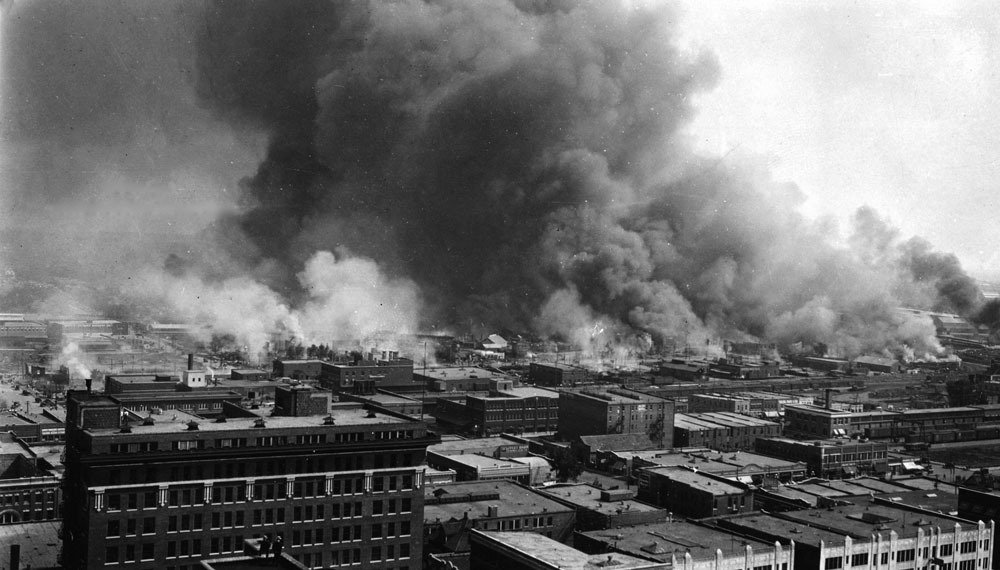
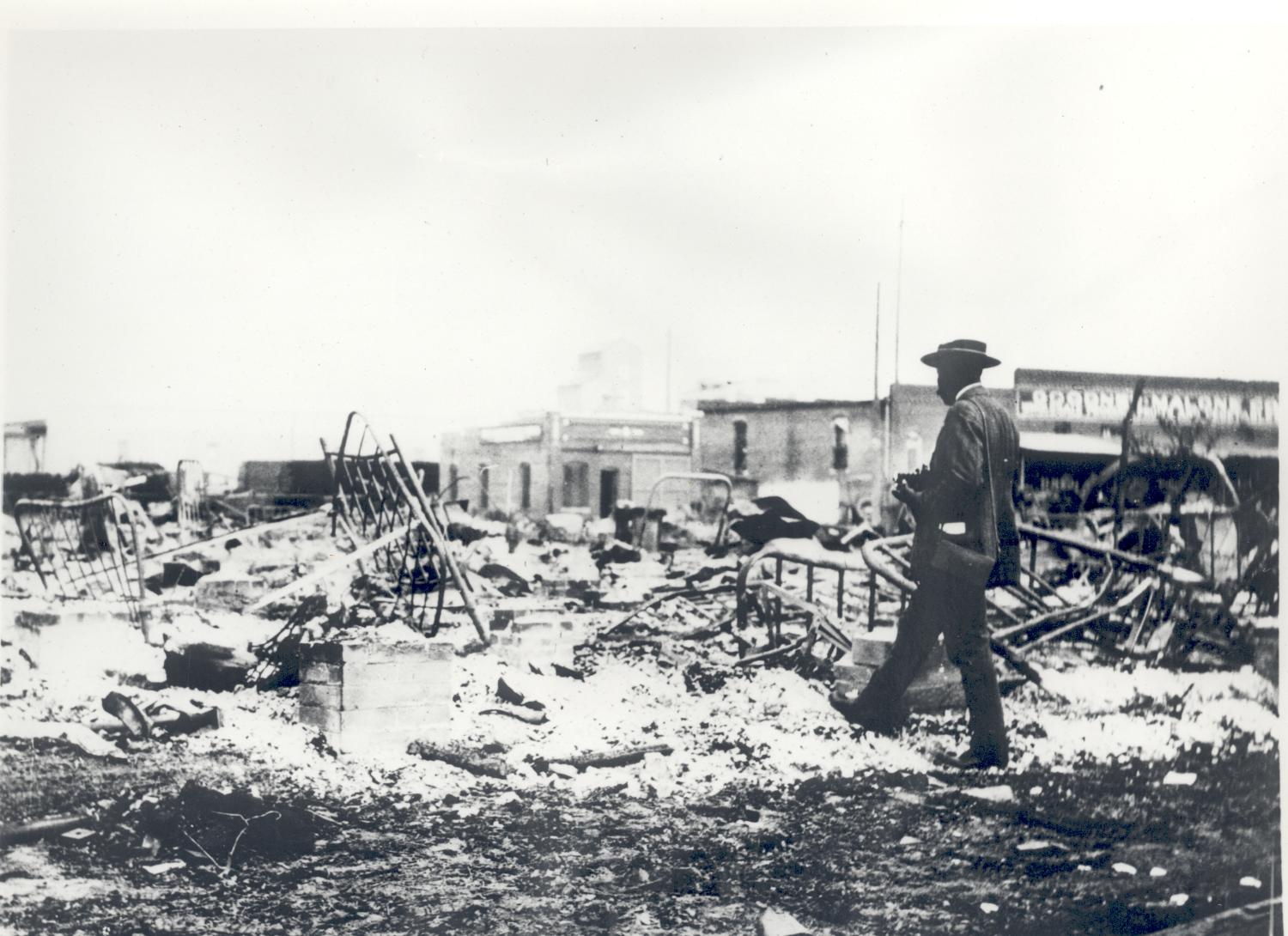
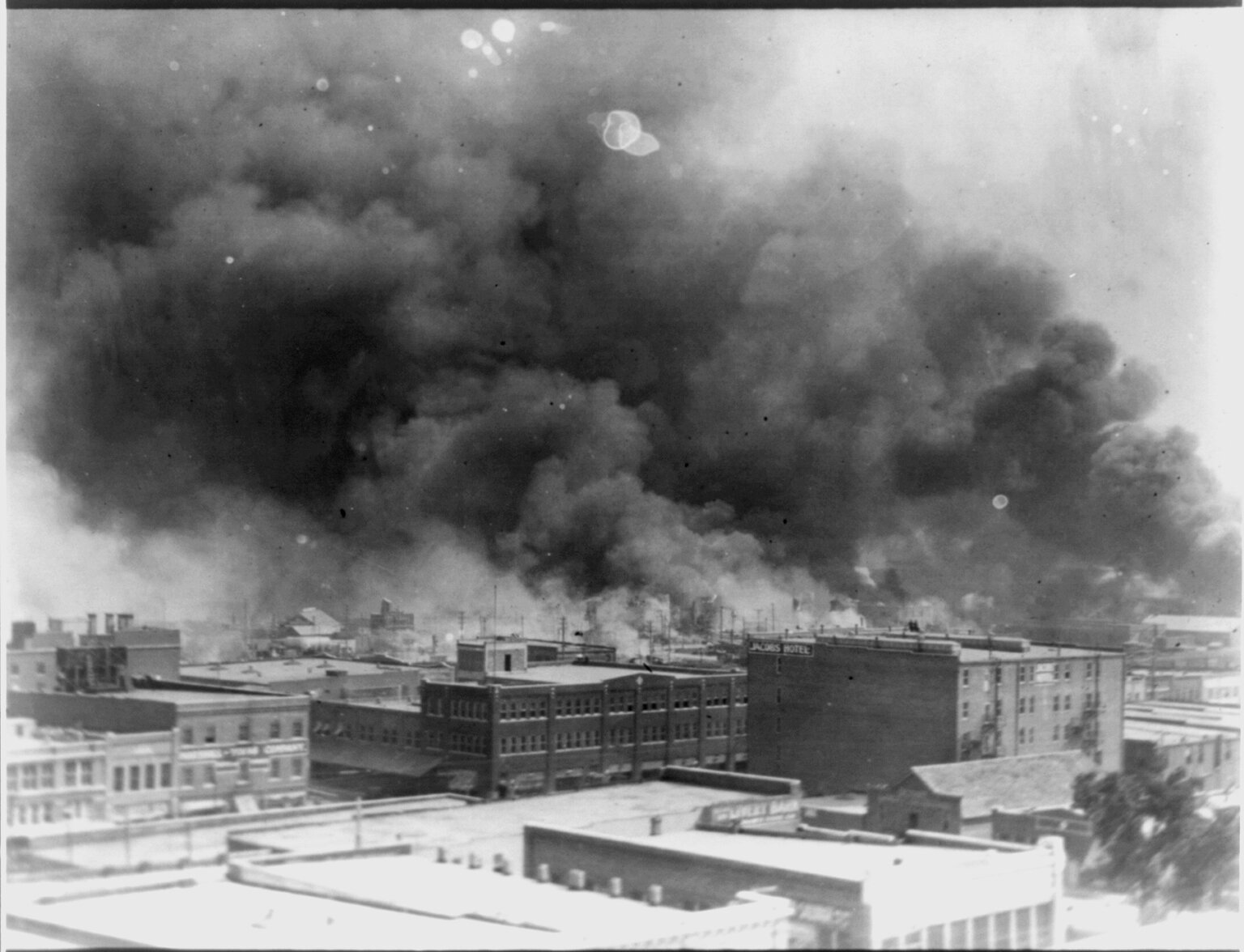
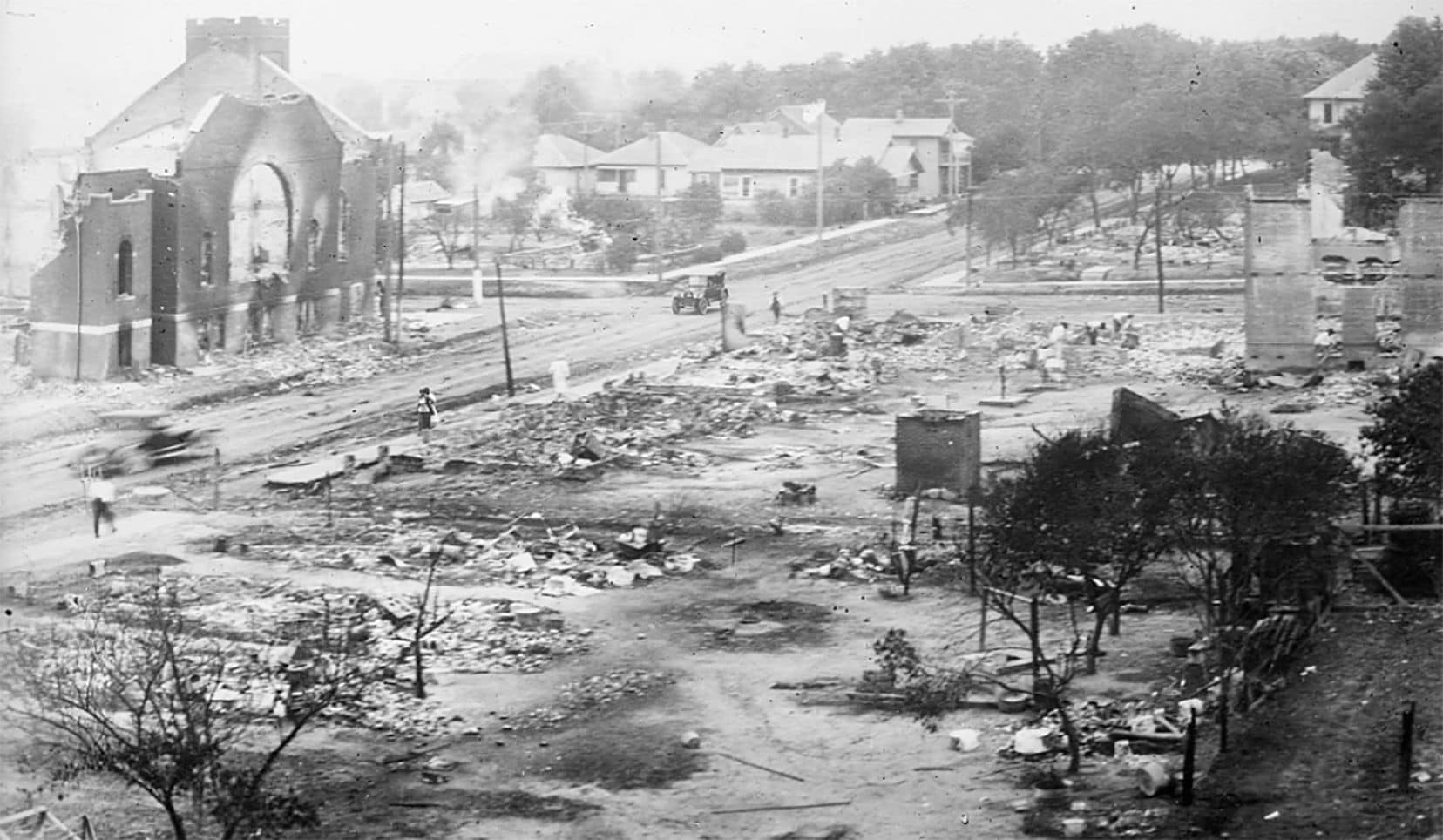
Today, Memorial Day, May 31, 2021, marks the 100th anniversary of this horrific event. This is the sort of event that programs such as The 1619 Project want to make sure are included in a truly comprehensive American history, one that doesn’t whitewash it (and isn’t that the perfect term for it?). There are many outstanding resources for more information; start with the Wikipedia page.
Jacob Fred Jazz Odyssey are a group from Tulsa who have been on the jam band scene since 1995. In 2011, they spent the second half of January at The Church Studio in Tulsa working on a new album to be titled The Race Riot Suite.

JFJO at the time were Chris Combs, lap steel, guitar; Brian Haas, piano; , double bass; and Josh Raymer, drums. For this recording, they also brought in a five-man horn section, including: Peter Apfelbaum, baritone saxophone; Steven Bernstein, trumpet, slide trumpet; Jeff Coffin, tenor saxophone; Matt Leland, trombone; and Mark Southerland, tenor saxophone, homemade horns.

The music was written and arranged by Combs. “All Prayers are excerpts from free-form group improvisation.” The executive producers were Haas and Eric Dunn for Kinnara Records. it was engineered by Chad Copelin and produced by Chris Stasinopoulos, who also did additional engineering. The cover was designed by Maiko Kuzunishi; the excellent artwork was by Peregrine Honig.

On Sunday, November 13, 2011, JFJO appeared at Bear Creek Music & Arts Festival and performed The Race Riot Suite in its entirety with several horn players, including Skerik on tenor saxophone.

Here is an overview of the album:
The Race Riot Suite
The cacophony of horns over drums and piano settles into a deliberate pace in “Prelude” (2:44) before the double bass enters, bringing the quartet to the fore and the horns gyrating in the background.
Solo piano by Haas opens “Black Wall Street” (7:15), which begins quietly. Raymer’s shuffle beat leads to fine lap steel work from Combs, the horns again accenting. It morphs into a ’30s-style swing tune, Combs out front again. The tune continues to bounce. At one point the horns swirl around the drum beat. Harshbarger also has a lovely feature. But the peace is about to be shattered, as we are all too aware from our current vantage point.
It takes ten seconds for “The Burning” (5:07) to explode into hate and rage, perfectly conveyed by the music. The discordant bursts tell the story. The acceleration of the manic piano does as well.
“First Prayer” (1:31) opens with piano and a bass clarinet-like sound from one of Southerland’s homemade horns. Then tenors weigh in.
“Mt. Zion” (4:52) is a gospel-filled lamentation of the first realizations of what has begun, piano and horns first.
“Lost in the Battle for Greenwood” (5:19) lurches forward as if in a stupor, again a reaction to the enormity of the destruction already evident. Combs on lap steel dances with the horns. Bernstein smolders on trumpet above the bouncy pace, then tenor, lap steel, and Leland on trombone dip in. Haas is superb. In 2012, he recorded a solo piano version of the suite.
“Second Prayer” (0:39) is another short improv centered around Harshbarger’s arco bass.
Several themes get twisted together in “Grandfather’s Gun” (4:17), with percussive piano, soaring lap steel, and horns punctuating before the tune slows almost to a stop, an avant/Ellington mashup. This one sticks in your head, as it should.
“Cover Up” (3:36) has an almost carnival aspect to it with a deliberate rhythm established by the horns. There is a nice tenor statement, then dueling tenors as it spirals upward and outward.
Muted trumpet, arco bass, and twin tenors offer “Third Prayer” (0:42).
“Eye of the Dove” (7:34) opens at dirge pace, a funeral march dominated first by superb piano. A hauntingly beautiful tenor solo (Coffin?) finds the other horns inserting themselves in the background. The ensemble horn work here is perfection, including the cacophonous ending.
“Last Prayer” (2:32) is the benediction of the suite, more arco bass and trombone, then tenor with the theme, such as it is, of the improv. The horns take the tune and the suite home to rest.
This is a remarkable work and a true testament to the atrocities committed in Tulsa 100 years ago today and tomorrow.